SCROLL
Technology Executive | CIO/CTO Advisor
John Kreiner
A deeply technical technology executive who understands business, builds teams, and knows how to make hard technology decisions in real operating environments.
40 years in technology | Deeply technical CIO/CTO leadership | Cloud, security, AI governance, software delivery, and transformation | SaaS, healthcare, nonprofit, financial services, AdTech
About
Technology Leadership Grounded in Business Reality
I am a technology executive and advisor with 40 years of experience spanning software engineering, infrastructure, cybersecurity, SaaS platforms, cloud modernization, Agile delivery, AI governance, and enterprise technology strategy. My career has moved across banking, adtech, financial services, healthcare, nonprofit, and entertainment technology — giving me a practical understanding of how technology decisions work across very different operating environments.
I began my career at Bank of Baltimore in the branch environment, working for nearly two years as a teller and back-office assistant before moving into software development. That combination of operational and technical experience shaped a foundational belief that has guided how I work and lead: technology leaders must understand how the business operates so that technology investments stay aligned with organizational priorities, create real value for users and customers, and help the business scale and grow.
Today, I work as a fractional technology executive and advisor, helping organizations align technology, security, systems, and teams with business strategy so they can execute better and grow smarter. Depending on the need, that may involve serving in a CIO, CTO, technology, engineering, or infrastructure leadership capacity. I bring hands-on technical judgment, executive-level leadership, and a practical understanding of how systems, teams, vendors, security, data, AI, and business priorities need to work together.
Based in Bel Air, MD · Open to fractional and full-time engagements · Serving nonprofit, healthcare, SaaS, and mission-driven organizations
What I Do
Where Technical Judgment Meets Business Reality
My work sits at the intersection of technical judgment and business reality. I help organizations make better technology decisions, modernize platforms, strengthen security, improve software delivery, and build teams that can execute. Whether the engagement is fractional advisory, a defined consulting project, or full-time executive leadership, my approach is the same: understand the business first, then apply technology thinking that fits the mission, scale, budget, and risk environment.
I have led technology organizations ranging from small nonprofit teams to global engineering groups of 100-plus professionals across three countries. I have served as CTO, CTSO, VP of Engineering, Director of Software Development, Head of PMO, and fractional CIO/CTO advisor. Each role reinforced the same belief: technology creates the most value when it is directly connected to business outcomes and the people it serves.
My elevator pitch is simple: I help organizations align technology, security, systems, and teams with business strategy so they can execute better and grow smarter.
How I Help
Practical Technology Leadership, Applied to Your Business
I work with organizations that need practical technology leadership, better execution, and clearer alignment between business goals and technical decisions.
Technology Organization Design
Assessment of team capability, leadership depth, hiring needs, training opportunities, and vendor-versus-internal decisions – matched to your mission, scale, budget, and timing.
Technology Strategy and Roadmaps
Practical plans that connect systems, security, data, teams, vendors, and business priorities into a roadmap the organization can actually execute.
Cloud and SaaS Modernization
Platform decisions grounded in architecture, operations, security, cost, maintainability, and team capability — not just a migration checklist.
Cybersecurity, Compliance, and Continuity
Governance, policies, audit readiness, business continuity, and responsible risk management in regulated and mission-driven environments.
Software Engineering and Delivery
Team structure, delivery discipline, Agile and SAFe, CI/CD, DevSecOps, quality, and execution transparency that connects to business outcomes.
AI Readiness and Governance
Responsible adoption, use-case prioritization, guardrails, data protection, and practical experimentation that creates real operational value.
Technology Leadership in Practice
How I Think About Technology Decisions
My work has always sat at the intersection of technical judgment and business reality. The examples below show how I think about technology decisions in practice: what to modernize, what to simplify, what to secure, what to measure, and how to set teams up to execute. I have led through multiple generations of technology change — from mainframe and client/server systems to enterprise integration, SaaS platforms, cloud modernization, Agile delivery, DevSecOps, and AI-enabled operations. That range matters because technology decisions are rarely one-size-fits-all.
Cloud and SaaS Modernization
At Advanced Metrics, cloud modernization meant modernizing Azure-based SaaS platforms supporting behavioral health organizations — balancing scalability, security, compliance, customer implementation needs, and the practical capabilities of the engineering team. That is the kind of cloud decision-making I bring: not “move it to the cloud” as a slogan, but determining what architecture, delivery model, security posture, data flow, and support model actually fit the business.
Software Delivery, Agile, CI/CD, and DevSecOps
I have led teams through multiple generations of software delivery: structured project management, PMO governance, Agile adoption, SAFe, CI/CD, DevSecOps, and AI-assisted engineering. At Advertising.com, that meant driving Agile adoption across a $15M-plus portfolio. At Integral Ad Science, leading SAFe PI Planning across 150-plus participants. At Advanced Metrics, applying secure DevSecOps in a regulated healthcare environment. Process only works when it fits the team, the architecture, the business urgency, and the risk profile.
Security, Compliance, and Regulated Environments
My security experience is grounded in regulated environments where security was not theoretical. At Prometric, implementing secure coding practices tied to FISMA and PCI requirements. At Advanced Metrics, serving as Security Officer leading HIPAA and SOC 2 audit activities. I think about security as a business discipline: governance, architecture, development practice, vendor exposure, business continuity, data protection, and executive accountability all have to work together.
Team Capability and Global Delivery
Technology strategy only works when the team can execute it. At Prometric, I led 100-plus engineering and QA professionals across three countries, built a center of excellence in Ireland, and expanded capabilities in India. At Advanced Metrics, the challenge was different: standardizing architecture, improving accountability, and developing leadership depth. In both cases the question was not simply what technology to use — it was what the organization could realistically build, support, secure, and sustain.
Data, Analytics, and Interoperability
At Advertising.com, my team was among the early adopters of Netezza Performance Server, supporting ingestion and processing of millions of data points per second. At Advanced Metrics, analytics tied directly to care coordination, Power BI reporting, interoperability, and value-based care workflows. Data platforms only matter when they help the business make better decisions, improve operations, or create better outcomes for customers and end users.
AI Readiness and Governance
In my current fractional work, I built an event management platform in two days using Angular, Node.js, MongoDB, and GitHub Copilot — validating how AI-assisted engineering can accelerate delivery while raising important questions around code quality, security, testing, and governance. I advise organizations on where AI creates practical value and where it introduces risk: workflow automation, analytics-enabled decision support, guardrails, validation, data protection, and secure adoption.
Right-Sized Technology Decisions
One advantage of working across enterprise, SaaS, nonprofit, healthcare, financial services, and adtech is that I have learned not to over-prescribe. A Fortune 500 environment may need complex architecture and enterprise tooling. A smaller nonprofit may need a cleaner application portfolio, better vendor terms, and a roadmap the team can sustain. My role is to match technology decisions to mission, scale, budget, risk, team capability, and timing.
The Work That Shaped How I Lead
Selected Stories From a Career Built on Technology and Trust
These are not job descriptions. They are the experiences that shaped how I think, what I have learned, and why those moments matter to my leadership today.
The Thread That Connects the Work
Across four decades and multiple generations of technology change, the common thread is not simply technology. It is the ability to understand how a business works, identify what matters, earn trust, and turn complexity into progress. My career has moved across banking operations, software development, enterprise consulting, professional services, project and portfolio leadership, global software engineering, SaaS platforms, cybersecurity, cloud modernization, and executive technology strategy. Each step reinforced the same belief: technology creates the most value when it is directly connected to business outcomes and the people it serves.
I have often stepped into environments where the work was complex, the stakes were high, and the path forward needed structure. Whether helping build a new business line, modernizing enterprise platforms, leading global software teams, establishing portfolio discipline, strengthening security and compliance, or rebuilding technology organizations, my work has centered on the same principles: understand the business, create clarity, build trust, improve execution, and deliver outcomes that matter.
That is the perspective I bring into consulting, advisory, and executive leadership work today. I help organizations make sense of complexity, align technology with business priorities, and turn strategy into practical execution. Whether the need is transformation, operational improvement, platform modernization, team leadership, delivery discipline, cybersecurity maturity, or technology strategy, my approach remains grounded in the same principles that shaped my career from the beginning: listen first, understand the business, build trust, create clarity, and deliver value people can actually see and use.
Experience
A Career Built on Technology Leadership Across Every Stage of the Business
Education and Certification
Credentials That Ground the Work
University of Baltimore
BS, Business Administration – Summa Cum Laude | 2003 – 2008
Project Management Institute
Project Management Professional (PMP) | 2004 – 2011
Scaled Agile, Inc.
SAFe®4 Agilist | 2018 – 2021
(ISC)²
CISSP — In Progress
What People Say
Perspectives From People Who Have Worked With Me
John is thoughtful, growth oriented, and pragmatic… John built a strong team around him that managed Advertising.com’s project portfolio on time, on budget, and on schedule.
Matthew Kraft — Chief Investment Officer, Kraft Investment Services
John is a true professional with a deep understanding of both the technology and the product. His ability to collaborate seamlessly with any team is remarkable.
Aurelian Săndulescu — Scrum Master, Advanced Metrics, IAS
He’s open for new technologies and not afraid to make the hard decisions when needed.
Sebastian Rafałko — Lead Software Engineer, coLAB
John has an impressive understanding of software development principles and an innate ability to lead teams toward achieving complex goals.
Filip Popović — Software Engineer, Zensar Technologies
John possesses a rare combination of technical expertise and a genuine get-things-done mindset.
Nikola Jeremic — Owner and Principal Consultant, Expert Group
John is the kind of leader who balances practical strategy while ensuring everyone is taken care of.
Lade Kolawole — Frontend Software Developer, FacilityOS
John is a rare leader who takes the time to establish key business relationships, trust among his direct reports, and a genuine caring for his employees.
Robert Tewey — Senior Executive Vice President, National Quality Systems
He is very supportive of his staff and stands behind them in crisis, while still holding them to high standards.
Gene Warfield — Sr. Agile Scrum Master, Global FIS
John has a great ability to work with very senior, capable technical people and communicate and earn their respect.
Ben Miller — VP of Engineering, Warner Bros. Discovery
John is not afraid to roll up his sleeves and dive in and help when necessary, coach and mentor his employees.
Keever Frye — CEO, Marke Consulting LLC
Insights
How I Think

Integrity. I have always believed that trust is earned through consistency, honesty, follow-through, and accountability. Skills matter, experience matters, and results matter, but integrity is what determines whether people can count on you when the stakes are high. In leadership, integrity means saying what needs to be said, doing what you said you would do, owning mistakes, and making decisions that are right even when they are not easy. It is the trait I value most in myself and the trait I most respect in others.


What character trait makes you most proud?
Integrity. I have always believed that trust is earned through consistency, honesty, follow-through, and accountability. Skills matter, experience matters, and results matter, but integrity is what determines whether people can count on you when the stakes are high. In leadership, integrity means saying what needs to be said, doing what you said you would do, owning mistakes, and making decisions that are right even when they are not easy. It is the trait I value most in myself and the trait I most respect in others.
University or life experience — which best prepares you for life?
Both matter, but life experience has shaped me the most. Formal education gave me structure, discipline, and a deeper appreciation for learning. I am proud that I completed my bachelor’s degree at night while serving in a demanding leadership role and graduated summa cum laude with a 4.0 GPA. But life experience taught me how people, business, pressure, responsibility, and judgment actually work. It taught me how to listen, adapt, solve problems, lead through ambiguity, and understand that the right answer on paper is not always the right answer in practice.
Who taught you the most important lesson you know, and what was it?
My father taught me the most important lesson I know: integrity and trust matter most. He worked in technology, as did my two older brothers, and I learned a great deal from watching how he carried himself. Be honest. Do the right thing. Keep your word. Treat people with respect. Build a reputation that can stand up over time. That lesson has stayed with me throughout my career. Technology changes constantly. Business models change. Titles change. But trust remains the foundation of leadership.
What’s a moment that changed how you see yourself?
A defining moment came early in my career at Bank of Baltimore. I competed against 103 candidates for a software programmer role — many with computer science degrees — and scored first. That moment changed how I saw myself. It helped me recognize that my mind worked analytically and that I genuinely enjoyed solving difficult problems. A second moment came when I left Advanced Metrics and read recommendations from colleagues. The comments were not just about technology delivery — they were about trust, mentorship, steadiness, integrity, and helping people grow.
Outside of work, what is important to you?
Success for me has never been only about career progression. My faith is the foundation that shapes how I try to live and lead, with integrity, humility, and genuine care for the people around me. The relationships I have built, the family I love, and the community I am part of matter more than any title or accomplishment. My wife, my family, and my faith keep me grounded and remind me that presence, patience, and faithfulness are not just personal values. They show up in how I work, too.
What life experience best prepared you for executive responsibility?
elping build a product and business capability from the ground up at VIPs and SYSCOM. That work went far beyond technical delivery. I helped shape an operating model, performance compensation plans, RFP responses, budgeting, marketing plans, training plans, and enterprise sales support. It was one of the first times I saw clearly that executive leadership is not about managing one narrow lane. It is about understanding the whole system — the customer, the business model, the team, the financials, the product, the delivery risks, and the people dynamics.
Outside the Office
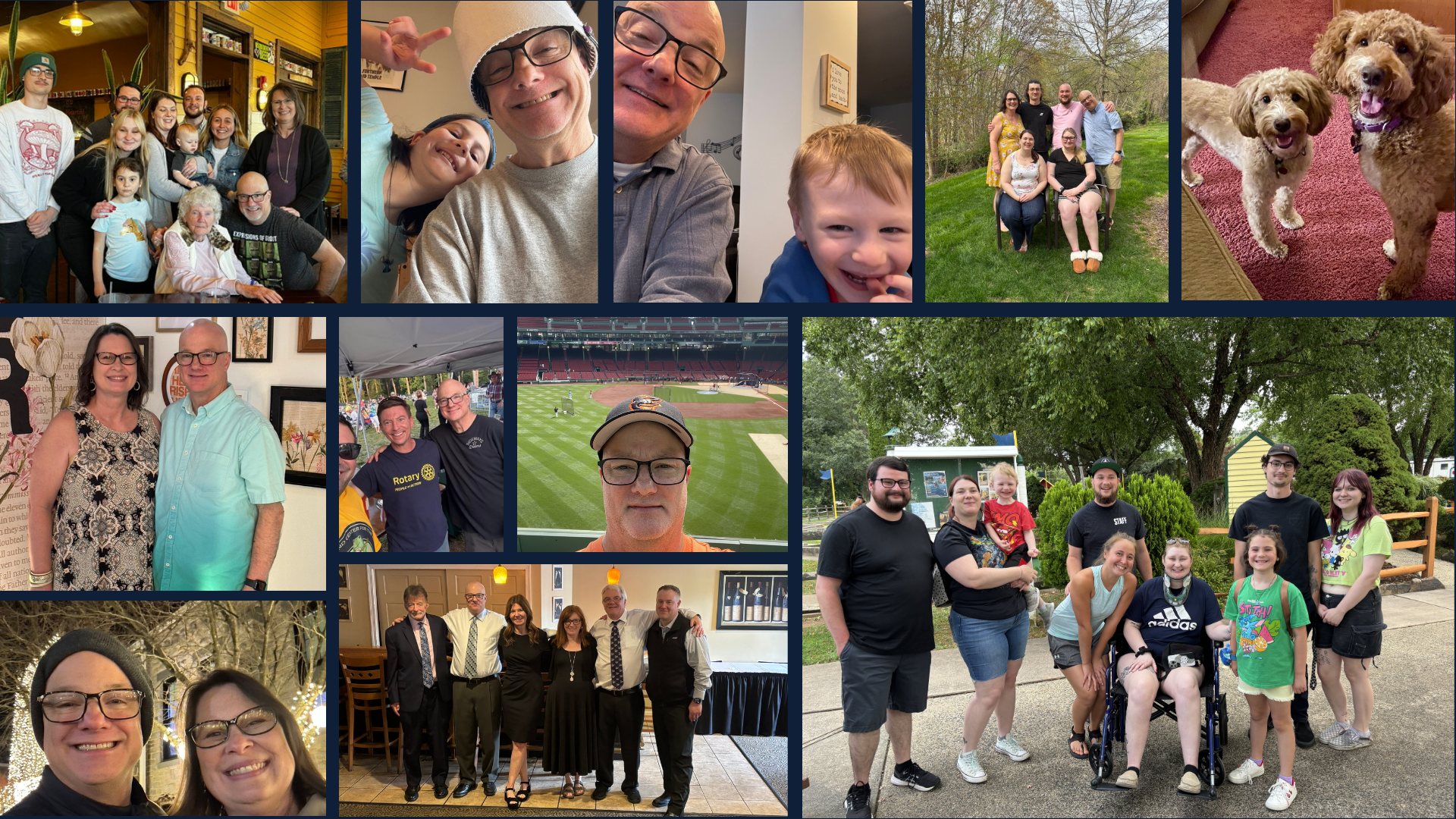
Family, faith, community, and the occasional Orioles game
Contact
Let’s Talk
Available for fractional CIO/CTO engagements, advisory work, and full-time technology executive roles. Deeply technical. Business grounded. Ready to engage.
Email – jfkreiner@gmail.com
LinkedIn – linkedin.com/in/johnkreiner